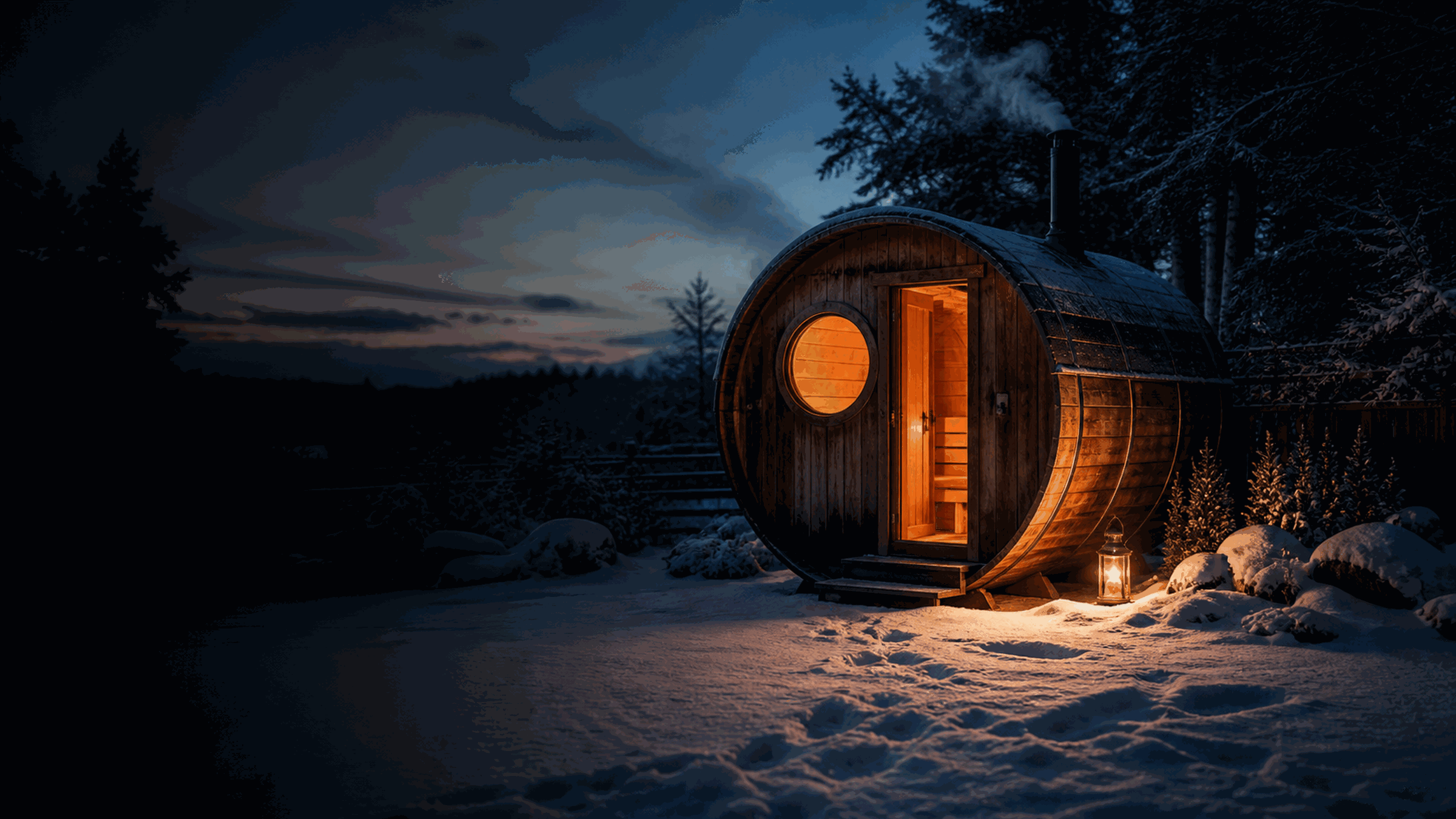
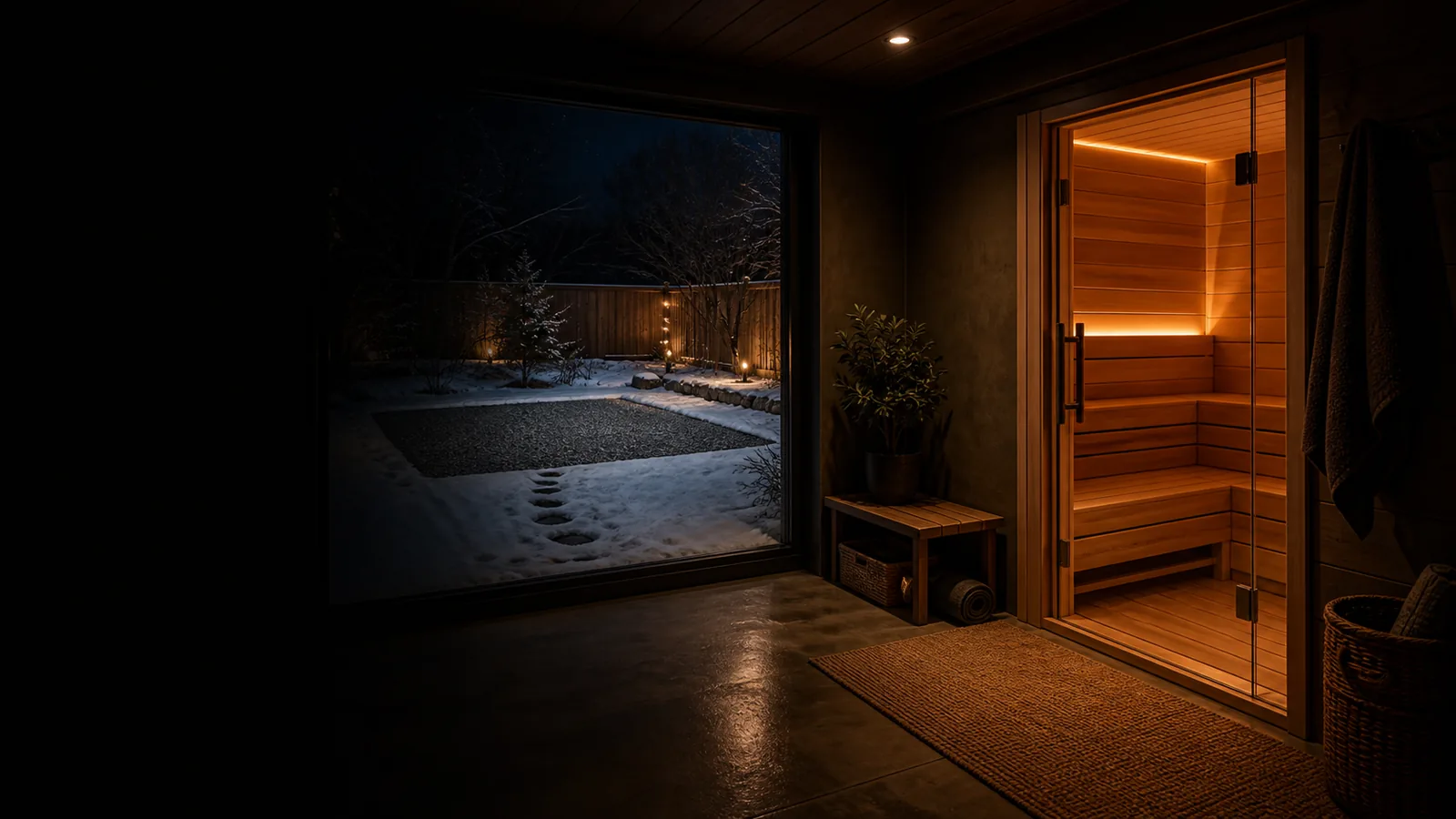
Fast heat and strong silhouette
Best when two to four people use it and the sauna should feel like a backyard object.
Updated 2026-07-06. This guide contains SelectSaunas affiliate links. We may earn a commission if you buy through those links, at no extra cost to you. Product pages show current merchant offers; this guide uses price bands for planning.
Do not let the yard photo choose this for you. The curved wall changes heat-up, headroom, shoulder room, bench layout, assembly, and the way the sauna sits in the yard.
Best when two to four people use it and the sauna should feel like a backyard object.
Best when capacity, tall sitters, porches, changing areas, or future upgrades matter.
Picture the actual session: who sits, who lies down, and whether the walk outside is part of the ritual.
This is the most common fork for outdoor sauna buyers, and most comparison content dodges the honest answer: both formats work, and the right pick follows from bench time and site constraints rather than from heat physics marketing.
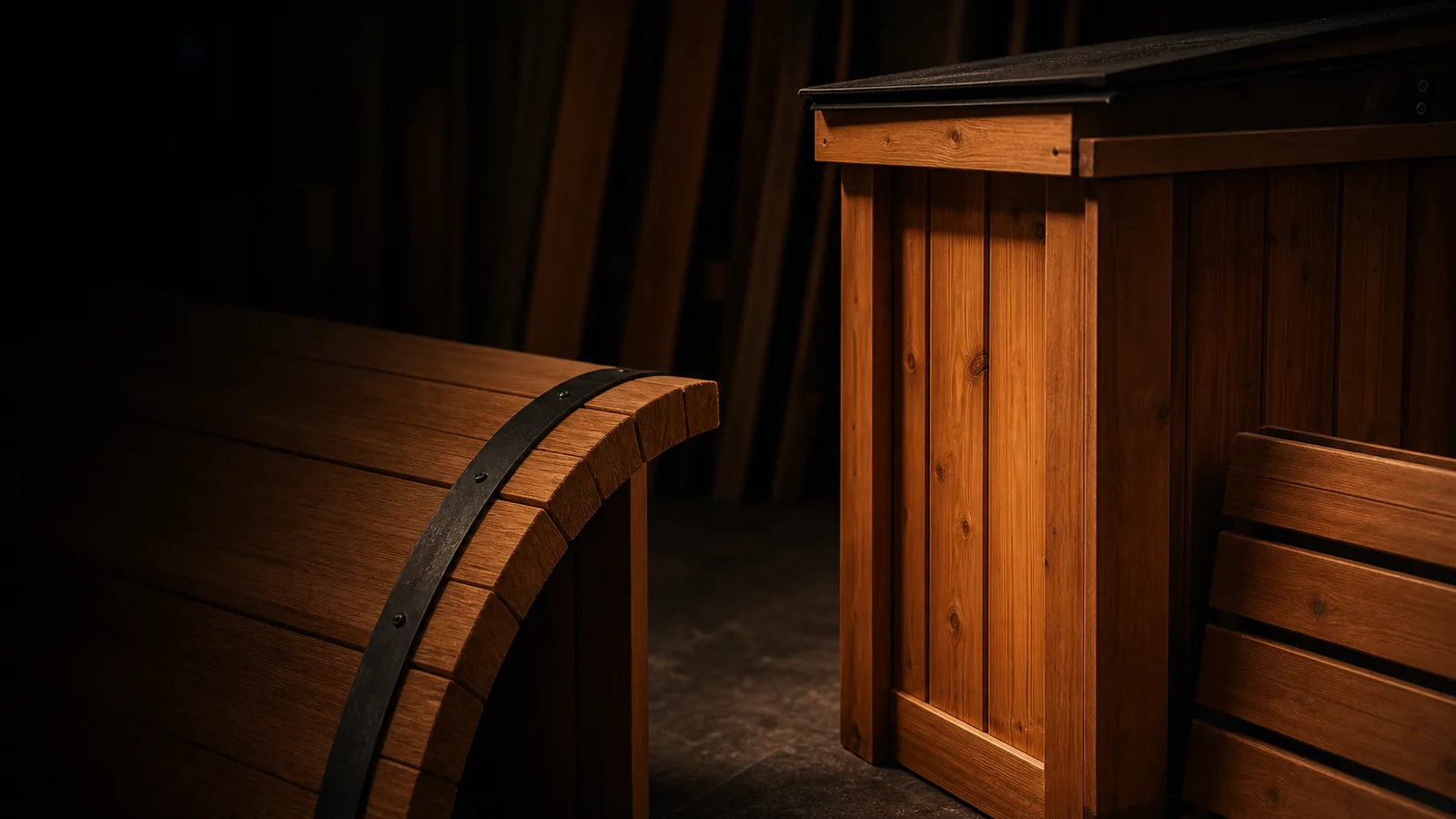
The structural difference is real, though. A barrel is a cylinder: less air volume per labeled person, faster heat-up, natural rain runoff, and a shape that dominates the yard visually. A cabin is a small building: vertical walls, full-height corners, flexible benches, and the option of porches, changing rooms, and panoramic rear windows.
These are the checks that turn a broad sauna preference into a realistic shortlist before the catalog gets involved.
| Factor | Best case | Watchout | Action |
|---|---|---|---|
| Heat-up | Barrel: less air volume for the same footprint. | Treating faster heat-up as the only criterion. | Balance speed against bench comfort and real capacity. |
| Interior space | Cabin: vertical walls and full-height corners. | A curved wall that crowds shoulders on upper benches. | Compare bench layout drawings, not person-count labels. |
| Yard presence | Barrel as a visible object; cabin as a small building. | Choosing a shape that fights the house, deck, or property line. | Stand in the yard and decide what kind of structure belongs there. |
The cylinder encloses roughly 20-25% less air than a square cabin with the same footprint, so the same heater reaches session temperature noticeably faster and holds it with less energy. The curved top also self-sheds rain and snow without a separate roof structure, and the silhouette is the reason half of these purchases happen at all.
Kit assembly tends to be simpler too: staves, bands, and two end walls, tightened like a giant wine barrel. For a two-person weekend project, barrels are the friendlier build.
Vertical walls mean the labeled capacity behaves like the real capacity: shoulders and heads get the same width as hips, upper benches are genuinely usable, and tall sitters do not lean into a curve. Multi-room layouts, changing areas, and porches attach naturally, which is why larger family and hosting builds drift toward cabins.
Cabins also integrate better with existing structures and are easier to insulate to building-like standards for very cold climates. The cost is a real roof that needs the same attention as any shed roof, more complex assembly, and slower heat-up for the same heater size.
First: how many people on a normal evening? Two to four favors the barrel; five plus, or lying-down sessions, favors the cabin. Second: how much site work will you accept? Barrels ask less of the base and the builder. Third: is the sauna a feature of the yard or a building in it? That aesthetic answer is usually the honest tiebreaker.
On price, the formats overlap heavily in the $3k-$8k bands at comparable capacity, so cost rarely decides it. Heater choice and site preparation move the total more than the shape does.
These modules use the structured catalog to make the guide actionable. Bands are for planning; merchant pages carry current offers, availability, and package details.
Affiliate disclosure: links in these cards may earn Sauna Decision Lab a commission. We keep the fit logic and watchouts visible so the product module stays editorial, not just commercial.
Best-selling barrel builds across capacities.
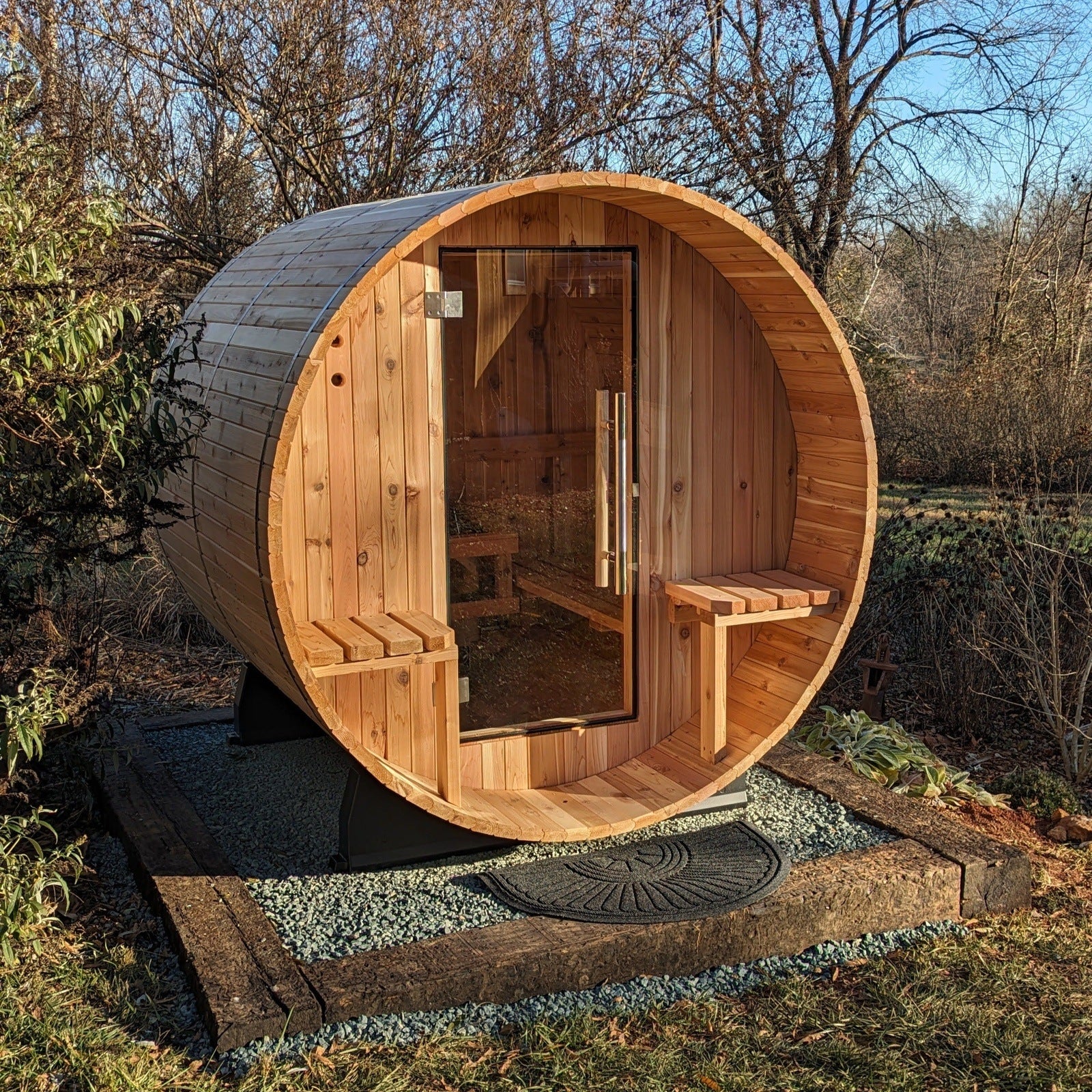
As Almost Heaven Saunas's barrel cabin, Almost Heaven Audra 2-4 Person Canopy Barrel Sauna, 6x5+1 ft. – 1 ft. Porch trades indoor convenience for outdoor presence. It offers a 2-4 person layout; budget in the $5k-$8k band and verify pad, clearance, and stove or heater specs first.
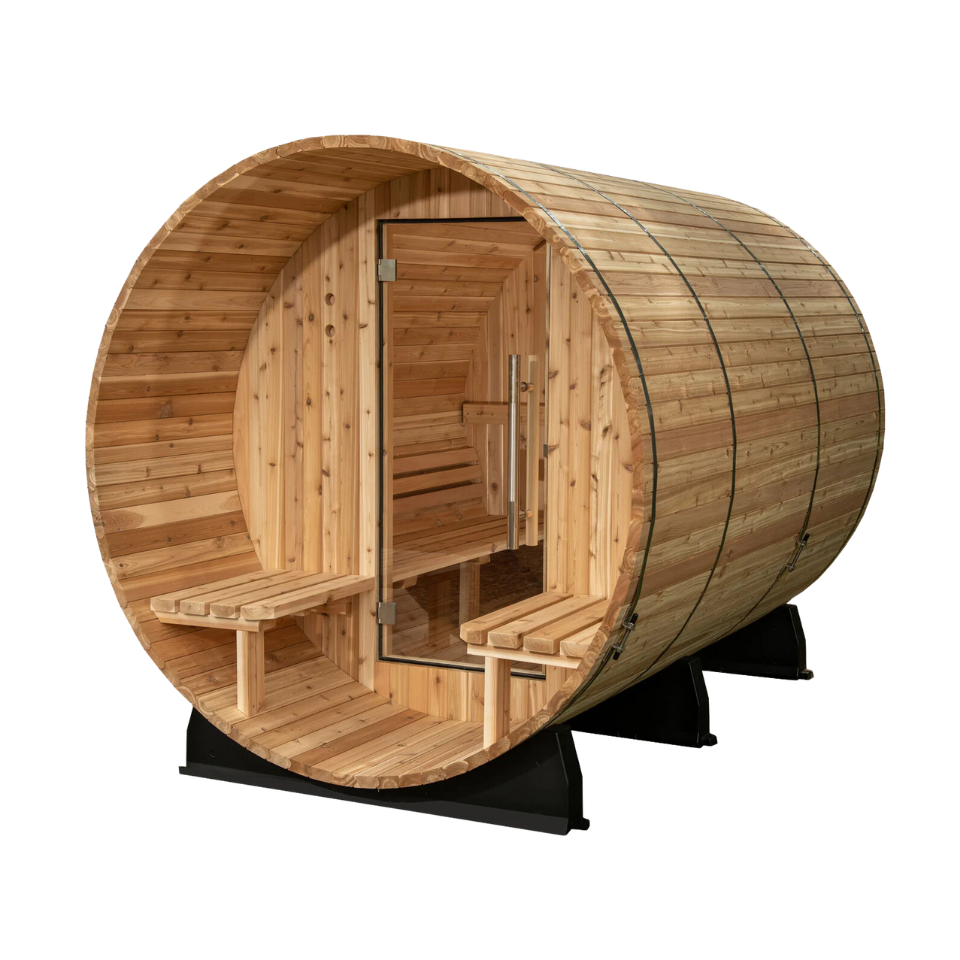
As Almost Heaven Saunas's barrel cabin, Almost Heaven Fairmont 4-Person Canopy Barrel Sauna, 6x5+2 ft. – 2 ft. Porch trades indoor convenience for outdoor presence. It offers a 4 person layout; budget in the $5k-$8k band and verify pad, clearance, and stove or heater specs first.
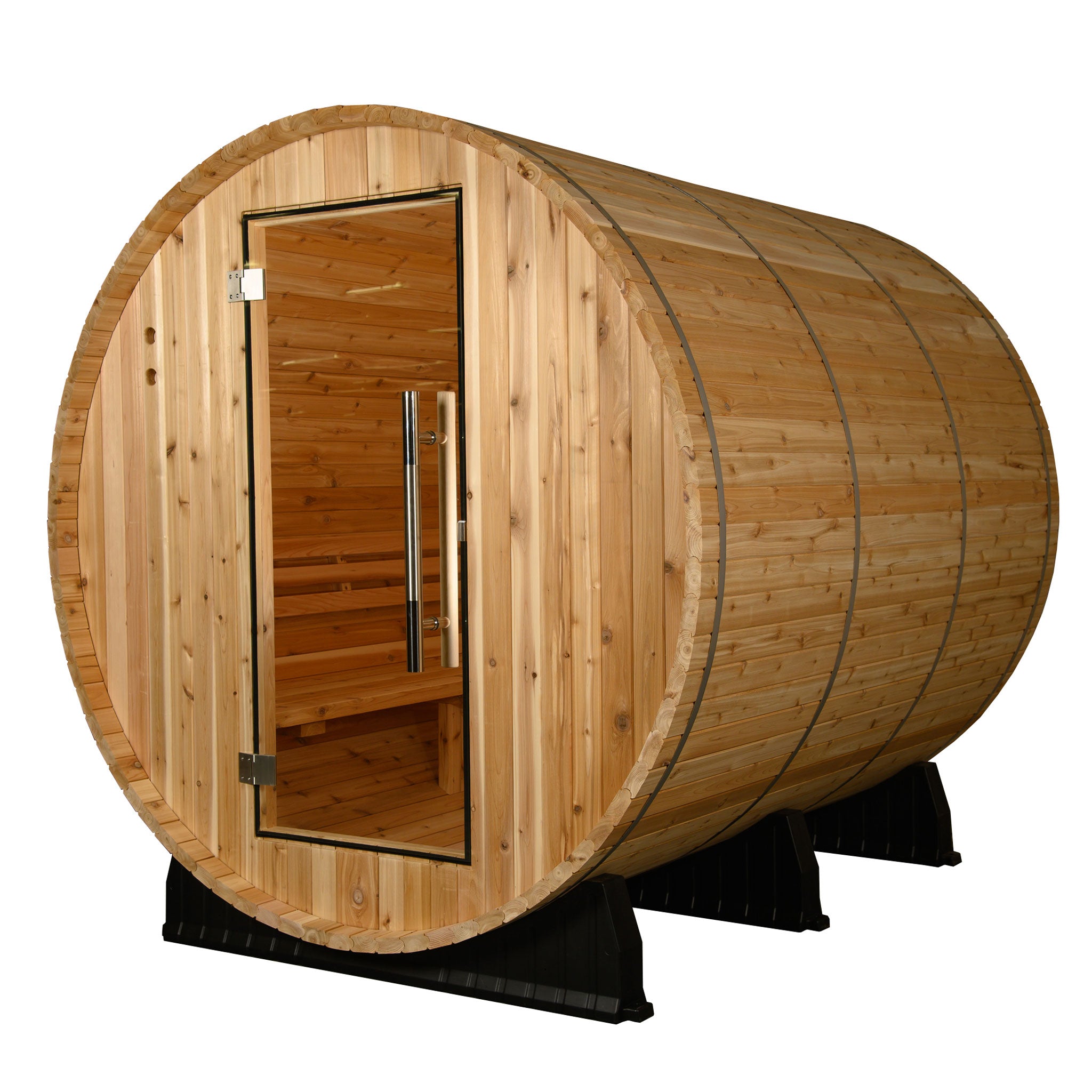
Almost Heaven Kenova 4-6 Person Barrel Sauna, 6x7 ft. sits in the outdoor ritual lane: a destination-style barrel build with a 4-6 person layout and pricing in the $5k-$8k band. Plan the pad, weather exposure, and heater electrical path before ordering.
Square-wall outdoor and indoor traditional cabins for comparison.
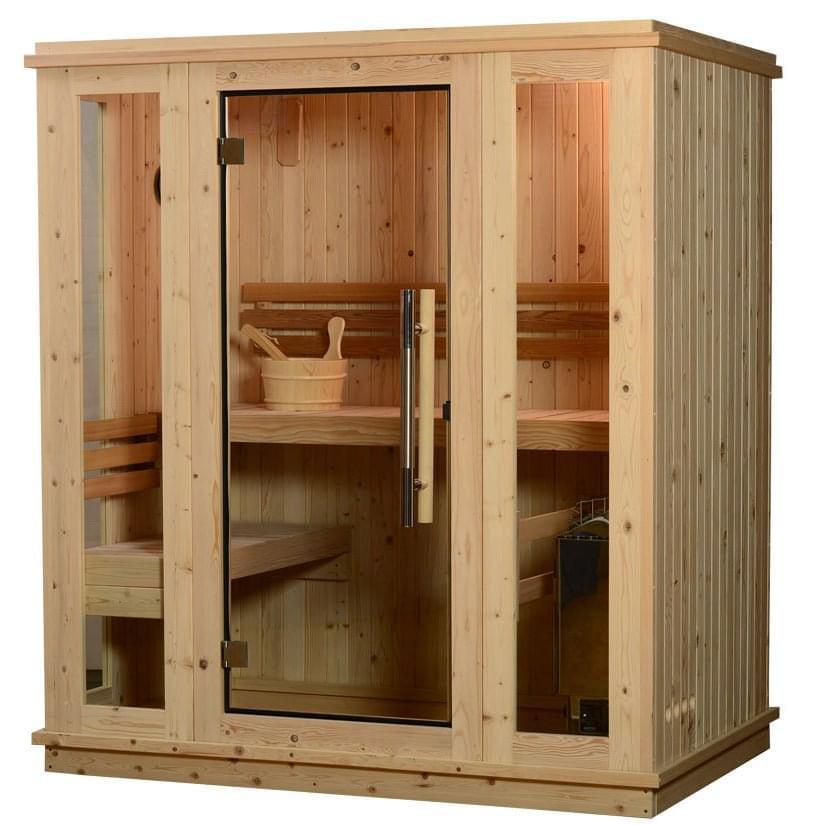
Almost Heaven Auburn 2-3 Person Indoor Sauna is an indoor traditional cabin with a 2-3 person layout, for buyers who want stones and high heat without moving the routine outdoors. Confirm ceiling height, ventilation, and the heater circuit, with pricing in the $3k-$5k band.
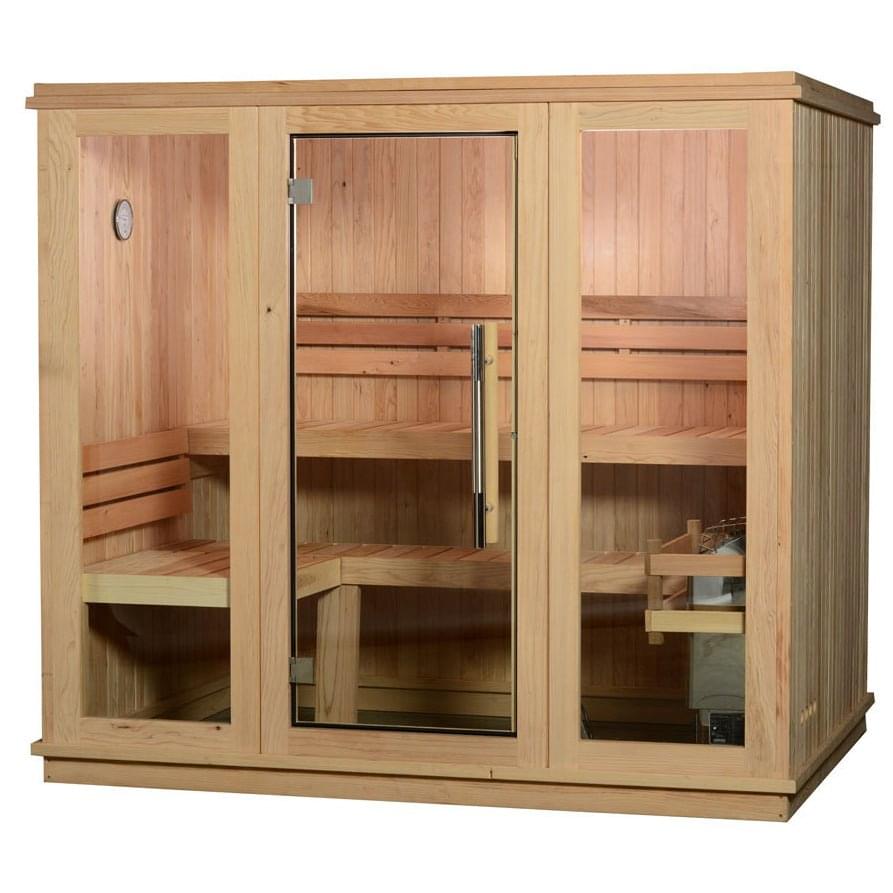
Almost Heaven Bridgeport 6-Person Indoor Sauna is an indoor traditional cabin with a 6 person layout, for buyers who want stones and high heat without moving the routine outdoors. Confirm ceiling height, ventilation, and the heater circuit, with pricing in the $5k-$8k band.
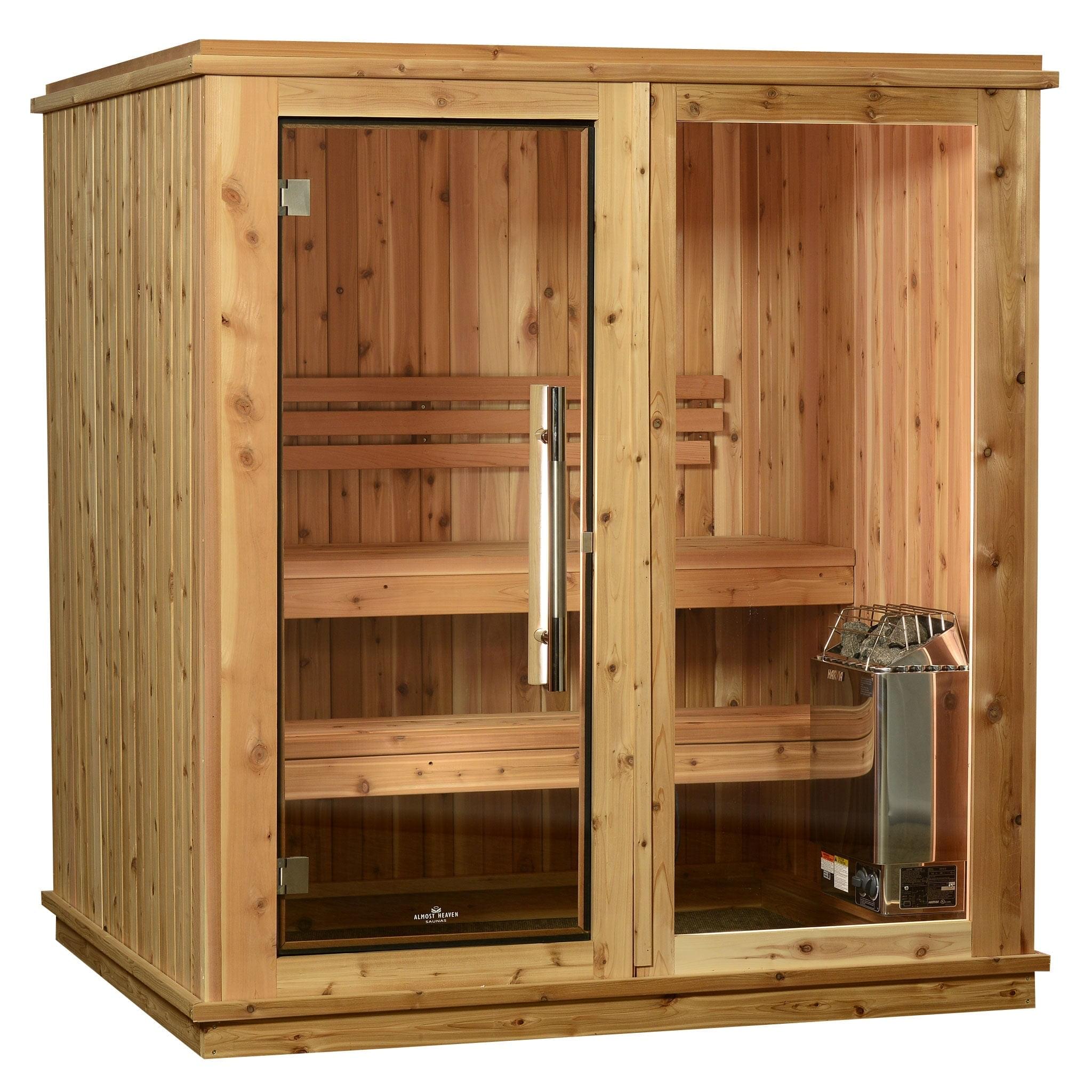
Almost Heaven Rainelle 4-Person Indoor Sauna brings the classic high-heat ritual inside. Expect a 4 person layout, plan a dedicated circuit for the heater, and treat the $3k-$5k band as the budget anchor until you check the current offer.
Yes, for a physical reason: the cylinder encloses less air than a square cabin of the same labeled capacity, so the same heater reaches temperature sooner. The difference is convenience-grade, not life-changing.
Wood grade and maintenance matter more than shape. Barrels shed water naturally but their bands need occasional tightening; cabins have conventional roofs that need conventional roof care. Both formats last decades when kept sealed and ventilated.
At comparable capacity they overlap in the $3k-$8k bands. Site work, heater inclusion, and wood grade move the total more than the format does, so compare specific listings rather than shapes.